





Introduction
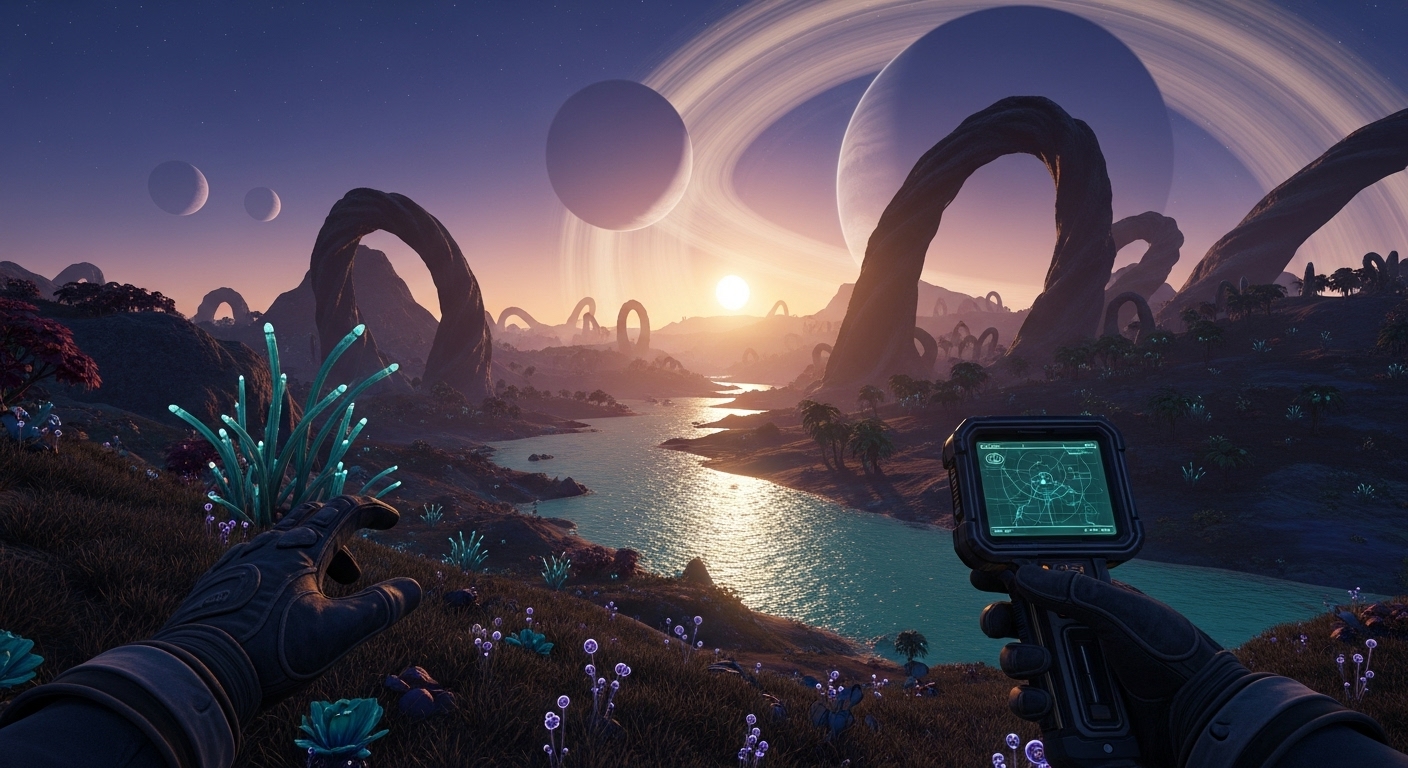
Exploration is one of the most immersive experiences that video games can provide. Among the many genres, first-person exploration games stand out because they place the player directly into the character’s perspective, creating a sense of presence and connection to the world. Unlike traditional shooters or action games, first-person exploration games are often designed around atmosphere, discovery, and narrative depth rather than pure combat or reflex-based gameplay. These titles invite players to step into unknown environments, uncover secrets, and feel the thrill of discovery.
Over the past two decades, the rise of first-person exploration games has been remarkable. They are no longer just small experimental projects but now major releases that have captured the attention of millions worldwide. This blog will explore some of the best first-person exploration games ever made, analyzing their unique qualities, design philosophies, and contributions to gaming culture.
What Defines a First-Person Exploration Game
Before diving into specific titles, it is important to define what makes a first-person exploration game distinct. Unlike first-person shooters that emphasize combat, exploration games prioritize environment, story, and immersion. They focus on the following characteristics:
- Perspective: The game is played entirely through the character’s eyes, enhancing immersion.
- Exploration-Driven Gameplay: The central activity is discovering environments, solving mysteries, or piecing together narratives.
- Minimal Combat: Many exploration games limit or completely remove combat, shifting focus to storytelling or puzzles.
- Atmosphere and Mood: These games often rely on strong art direction, sound design, and pacing to create memorable experiences.
- Narrative Discovery: Storytelling is often environmental or nonlinear, encouraging players to interpret events as they explore.
With this foundation, let us look at some of the best titles that embody these elements and showcase the full potential of first-person exploration games.
Myst and Its Legacy
Myst is often considered the pioneer of first-person exploration. Released in the early 1990s, it introduced players to an interactive world filled with puzzles, strange contraptions, and mysterious landscapes. Though primitive by today’s standards, Myst laid the foundation for exploration-driven design.
The appeal of Myst lies in its sense of isolation and discovery. Players are not guided by arrows or forced tutorials but must rely on observation and logical deduction to progress. Its focus on environmental storytelling and mystery inspired countless future developers to embrace exploration as the core of their games. The influence of Myst can be seen in nearly every modern exploration title, making it a cornerstone of the genre.
The Witness
The Witness is a modern masterpiece of first-person exploration and puzzle design. Created by Jonathan Blow, the game places players on a seemingly deserted island filled with interconnected puzzles. Each puzzle teaches the player a new concept, gradually building a language of problem-solving without words or instructions.
What makes The Witness remarkable is how seamlessly exploration and puzzles intertwine. The environment itself becomes a puzzle, with hidden patterns and clues woven into the natural landscape. This integration of world design and gameplay rewards curiosity and close observation, making every discovery deeply satisfying. The Witness also embraces ambiguity, leaving players to interpret its meaning and philosophy for themselves, adding layers of depth to the exploration experience.
Firewatch
Firewatch is a shining example of how first-person exploration games can tell powerful, emotional stories. Set in the Wyoming wilderness during the 1980s, players take on the role of a fire lookout named Henry. Through his radio conversations with his supervisor, Delilah, the narrative unfolds in deeply personal and often haunting ways.
The beauty of Firewatch lies in its environment and storytelling. The forest feels alive, with its shifting light, wildlife, and natural sounds creating a sense of place that draws players in. The narrative, meanwhile, deals with themes of loneliness, guilt, and human connection, making it one of the most emotionally impactful exploration games ever made. It demonstrates that exploration does not have to be about grand mysteries but can also be about personal journeys and intimate storytelling.
Gone Home
Gone Home is often credited with popularizing the modern first-person exploration genre, sometimes referred to as the “walking simulator.” Set in the mid-1990s, the game places players in a seemingly abandoned family home. By examining objects, notes, and rooms, players slowly uncover the story of the family and the protagonist’s sister.
Gone Home emphasizes environmental storytelling at its finest. There are no enemies, no combat, and no traditional puzzles. The challenge lies in piecing together the narrative from clues scattered throughout the environment. Its success proved that video games could be just as powerful as novels or films in delivering emotionally resonant stories through exploration.
Subnautica
Subnautica takes the first-person exploration genre underwater, delivering one of the most unique survival experiences in gaming. Players crash-land on an alien ocean planet and must explore its depths to gather resources, build bases, and uncover the mystery of the planet’s past.
The appeal of Subnautica lies in its sense of scale and danger. The ocean is both beautiful and terrifying, filled with alien creatures, glowing reefs, and dark trenches. Exploration feels exhilarating and nerve-wracking, as players never know what they might encounter in the deep. Unlike many exploration games that focus purely on narrative, Subnautica balances survival mechanics with storytelling, creating a rich and immersive experience.
Outer Wilds
Outer Wilds has quickly become one of the most celebrated exploration games of all time. Set in a handcrafted solar system stuck in a time loop, players explore planets, uncover secrets, and piece together the mysteries of an ancient civilization.
What sets Outer Wilds apart is its sense of wonder and discovery. Every planet has unique mechanics and surprises, from collapsing towers to shifting sands and hidden underground caverns. The time loop mechanic creates tension and urgency, but it also encourages experimentation and curiosity. The game rewards exploration with revelations rather than items, making knowledge the ultimate prize. Outer Wilds is a love letter to curiosity and is often hailed as one of the greatest achievements in game design.
Dear Esther
Dear Esther is one of the earliest examples of narrative-driven exploration games that pushed the boundaries of interactive storytelling. Set on a desolate island, the game has players wandering through landscapes while listening to fragments of narration.
Though simple in mechanics, Dear Esther captures the power of atmosphere and ambiguity. Its poetic narration and haunting environments create a deeply emotional and contemplative experience. It is often credited with paving the way for the rise of narrative-driven exploration games in the modern era, proving that games could be art as much as entertainment.
The Long Dark
The Long Dark combines first-person exploration with survival elements in a frozen post-apocalyptic wilderness. Players must scavenge for food, manage resources, and avoid environmental hazards such as wolves and freezing temperatures. Unlike other survival games, The Long Dark emphasizes realism, with mechanics like calorie counting, weather systems, and exhaustion.
The game’s exploration is deeply immersive, as each journey into the wilderness feels dangerous and meaningful. The stark beauty of the snowy landscapes, combined with the constant tension of survival, creates an unforgettable experience. It demonstrates how exploration can be combined with survival mechanics to create games that are both atmospheric and challenging.
Bioshock and Environmental Storytelling
While Bioshock is primarily remembered as a first-person shooter, it deserves recognition for its contributions to exploration. The underwater city of Rapture is one of the most iconic environments in gaming history. Through its decaying art deco architecture, audio logs, and hidden spaces, players uncover the story of a society that collapsed under the weight of its ideals.
Bioshock proved that even games with combat could deliver powerful exploration experiences. Its environmental storytelling remains a benchmark for the genre, influencing countless future titles. The feeling of walking through the haunting halls of Rapture, piecing together its tragic history, is exploration at its finest.
No Man’s Sky
No Man’s Sky represents one of the most ambitious exploration projects in gaming. Its procedurally generated universe offers billions of planets for players to explore, each with unique landscapes, ecosystems, and discoveries. Though its initial release was controversial, years of updates have transformed it into a celebrated exploration game.
The beauty of No Man’s Sky lies in its infinite possibilities. Players can explore alien planets, discover species, build bases, and travel seamlessly across the galaxy. It captures the fantasy of interstellar exploration, offering experiences that feel truly boundless. Its evolution over time has also made it a success story for how developers can embrace the GaaS model to continually improve and expand a game.
The Emotional Power of Exploration
One of the unique strengths of first-person exploration games is their ability to evoke strong emotions. Whether it is the loneliness of wandering a deserted home in Gone Home, the awe of discovering a new planet in Outer Wilds, or the fear of diving into the depths in Subnautica, these games connect with players on a deeper level.
Exploration is inherently tied to curiosity, wonder, and sometimes fear. By placing players in the first-person perspective, developers heighten these feelings, making exploration more personal and impactful.
The Future of First-Person Exploration Games
The future of the genre looks bright, with advances in technology opening new possibilities. Virtual reality has already demonstrated how immersive first-person exploration can be, allowing players to physically look around and feel present in the world. As VR continues to evolve, exploration games may become even more lifelike and engaging.
Artificial intelligence and procedural generation also promise to enhance the genre. Developers could create worlds that dynamically adapt to player actions, offering endless opportunities for discovery. With the growing popularity of indie developers and experimental design, we can expect even more innovative titles that push the boundaries of what exploration can mean in gaming.
Conclusion
First-person exploration games have carved out a unique and powerful niche in the gaming landscape. From the early influence of Myst to modern masterpieces like Outer Wilds and The Witness, these games demonstrate the magic of curiosity, discovery, and storytelling. They remind us that gaming is not always about action or competition but can also be about reflection, immersion, and emotional connection.
The best first-person exploration games transport players into worlds filled with wonder, mystery, and meaning. Whether wandering through alien oceans, uncovering family secrets, or exploring the ruins of ancient civilizations, these experiences capture the essence of why we play games in the first place: to explore the unknown and discover something new about the world, and perhaps ourselves.