




The Ever-Evolving World of Gaming: A Deep Dive into the Future of Interactive Entertainment
Introduction
Gaming has transformed from a simple pastime into one of the most dominant forms of entertainment in the world. What began as pixelated adventures and limited gameplay mechanics has evolved into immersive experiences that rival Hollywood blockbusters in storytelling, visuals, and emotional depth. The gaming industry is now a multi-billion-dollar powerhouse influencing culture, technology, and social interaction. From console gaming and esports to virtual reality and mobile platforms, gaming continues to push boundaries and redefine what it means to play.
This blog explores the evolution of gaming, the rise of new technologies, and how this global phenomenon continues to shape society, technology, and entertainment as a whole.
The Early Days of Gaming
The roots of gaming can be traced back to the 1970s and 1980s when consoles like the Atari 2600 and arcade machines such as Pac-Man and Space Invaders dominated entertainment venues. These games were simple in design but groundbreaking in their ability to engage players and introduce the concept of digital competition.
The 1990s brought about a massive leap forward with the arrival of iconic systems like the Super Nintendo Entertainment System and Sega Genesis. This era introduced players to beloved franchises such as Mario, Sonic, and The Legend of Zelda. The rise of home consoles made gaming more accessible, turning it into a mainstream activity for families and youth alike.
The Shift to 3D and Immersive Storytelling
As technology improved, developers began exploring the potential of three-dimensional graphics. The mid to late 1990s saw a major transition to 3D gaming with consoles like the PlayStation and Nintendo 64. Games such as Final Fantasy VII, Metal Gear Solid, and The Legend of Zelda: Ocarina of Time redefined what was possible in storytelling and player immersion.
This era also marked the beginning of gaming as an art form. Developers began blending narrative depth, cinematic presentation, and music to evoke emotions and engage players on a more personal level. Gamers were no longer just completing levels; they were experiencing stories and connecting with characters.
The Rise of Online Gaming
The early 2000s brought a revolution with the introduction of online multiplayer gaming. Titles like Halo 2, Counter-Strike, and World of Warcraft changed how players interacted with one another. Online gaming fostered communities, rivalries, and friendships that spanned across continents.
With high-speed internet becoming more accessible, online connectivity became a core feature of gaming. This new digital frontier birthed the rise of esports, where competitive gaming turned into a legitimate sport watched by millions worldwide. Players could now test their skills against anyone, anytime, anywhere.
The Mobile Gaming Revolution
The launch of smartphones completely altered the gaming landscape once again. Mobile gaming opened the door for millions of new players who had never owned a console or gaming PC. Games like Angry Birds, Candy Crush, and Clash of Clans showed that gaming could be both casual and incredibly profitable.
Mobile platforms also made gaming more social. Features such as multiplayer modes, chat integration, and online leaderboards allowed users to compete or collaborate with friends seamlessly. Mobile gaming also democratized access, making it possible for anyone with a smartphone to enjoy high-quality entertainment.
The Role of Esports in Modern Gaming
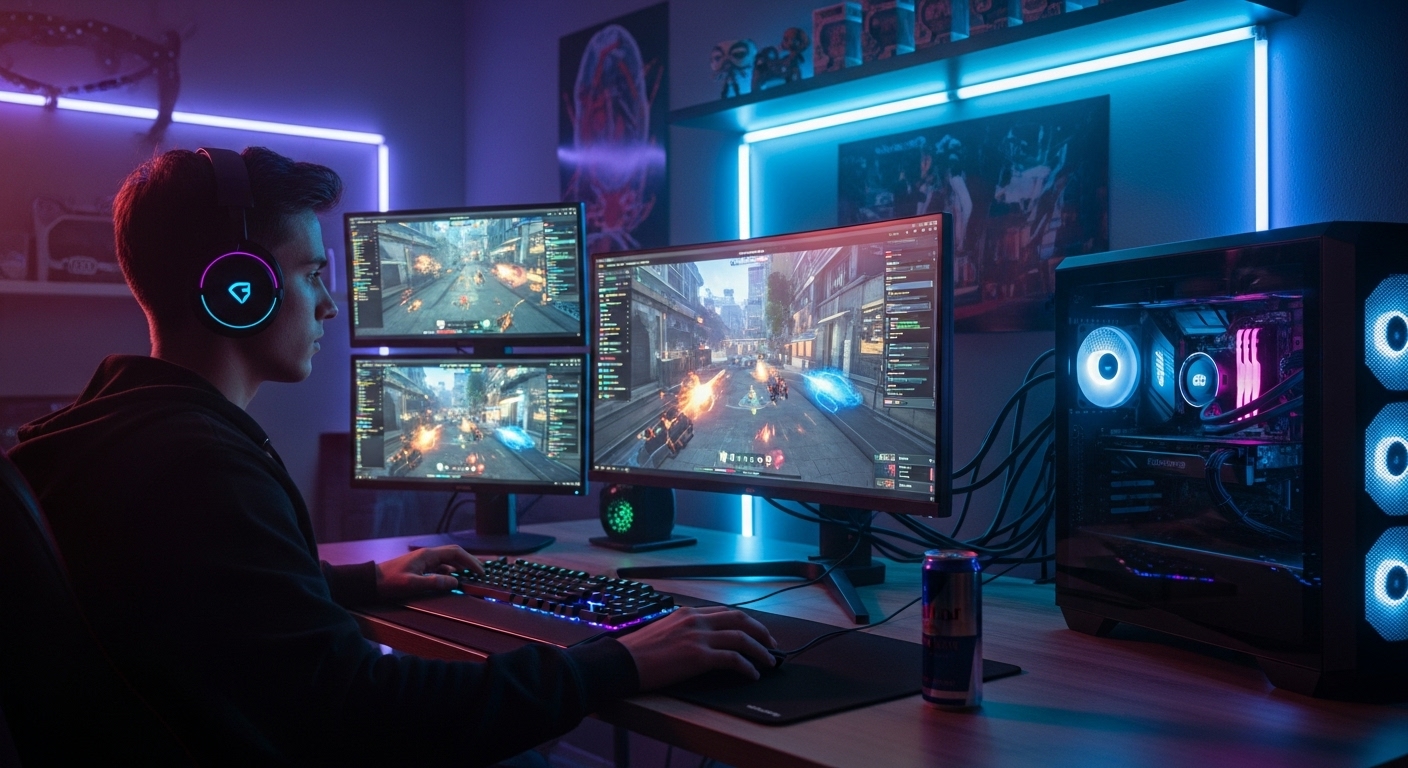
Esports is now a global industry, attracting massive audiences and sponsorships. Games like League of Legends, Dota 2, Fortnite, and Counter-Strike: Global Offensive have professional leagues, teams, and tournaments with million-dollar prize pools. The competitive scene has given rise to professional gamers, coaches, and analysts who dedicate their lives to mastering their craft.
Streaming platforms such as Twitch and YouTube Gaming have further fueled esports’ growth, providing fans with live coverage and behind-the-scenes access to their favorite players. Esports events now fill entire stadiums, with fans cheering just as passionately as they would for traditional sports.
The Growth of Virtual and Augmented Reality
Virtual reality (VR) and augmented reality (AR) are changing the way we experience games. VR headsets allow players to step into digital worlds and interact with them in a deeply immersive way. Games like Beat Saber and Half-Life: Alyx have showcased the potential of VR as an entirely new medium for interactive storytelling.
Meanwhile, AR games like Pokémon GO have successfully merged the digital and physical worlds. Players explore their surroundings to capture virtual creatures, encouraging real-world interaction through gaming. The possibilities for AR and VR are endless, as these technologies continue to evolve and become more accessible to the general public.
Cloud Gaming and Accessibility
Cloud gaming represents the next frontier of the gaming industry. Services that allow players to stream games directly to their devices without needing powerful hardware are making gaming more accessible than ever. Players no longer need expensive consoles or gaming PCs to enjoy top-tier titles.
Cloud technology also allows for cross-platform play, meaning that players on different devices can enjoy games together seamlessly. This accessibility is reshaping the industry’s economics and broadening its audience, bringing gaming to regions previously limited by hardware availability.
The Social Impact of Gaming
Gaming has become more than just entertainment—it’s a social experience. Multiplayer modes, online chat, and community-driven content have created vast digital societies. Players form friendships, teams, and even relationships through gaming platforms.
Gaming has also proven to be a powerful tool for mental health and education. Studies have shown that gaming can improve problem-solving skills, enhance creativity, and foster teamwork. For many, gaming provides a safe outlet for stress relief and social connection.
The Role of Storytelling in Modern Games
Today’s games rival movies and literature in their ability to tell emotionally charged stories. Games like The Last of Us, Red Dead Redemption 2, and God of War have set new benchmarks for storytelling in interactive media. Developers now focus heavily on character development, voice acting, and cinematic design to create experiences that resonate deeply with players.
Interactive storytelling also gives players agency. Choices made during gameplay can affect the outcome of the story, providing a sense of ownership and immersion that other media cannot match. This interactivity is one of the most powerful aspects of gaming’s evolution.
Indie Games and Creativity
While large studios dominate the gaming market, independent developers have brought innovation and artistic expression to the forefront. Indie titles like Hades, Celeste, and Stardew Valley have achieved critical and commercial success by focusing on creativity, emotional storytelling, and unique gameplay mechanics.
Indie developers often push the boundaries of conventional design, exploring new genres and play styles. They prove that innovation does not always require massive budgets but rather passion and imagination.
The Role of Artificial Intelligence in Gaming
Artificial Intelligence is becoming a game-changer in game development and player experience. AI is used to create more realistic non-player characters (NPCs), adaptive gameplay systems, and personalized gaming experiences.
AI-driven analytics also help developers understand player behavior, improving game design and balance. In the future, AI could enable games to evolve dynamically based on each player’s style, creating a unique experience every time.
The Future of Gaming
As technology continues to advance, the possibilities for gaming are limitless. The integration of artificial intelligence, cloud computing, virtual reality, and blockchain is expected to revolutionize the industry even further.
The next generation of gaming will likely focus on deeper immersion, greater interactivity, and enhanced social experiences. Games may become more integrated into daily life, blurring the line between the virtual and real worlds.
The Cultural Influence of Gaming
Gaming has become a cultural force that transcends generations. It influences music, fashion, film, and even education. Characters like Mario, Master Chief, and Lara Croft have become cultural icons recognized across the globe.
Gaming communities drive creativity and collaboration, producing fan art, music, and cosplay that extend beyond the digital realm. The impact of gaming on modern culture is undeniable—it has become a shared language that connects millions of people.
Economic Power of the Gaming Industry
The gaming industry is now larger than the film and music industries combined. With billions in annual revenue, gaming continues to be one of the most lucrative sectors in entertainment. Developers, publishers, hardware manufacturers, and content creators all play vital roles in this massive ecosystem.
As new business models such as subscriptions, free-to-play mechanics, and digital marketplaces evolve, the gaming economy becomes more dynamic and inclusive. The ability to reach global audiences through digital distribution ensures that gaming will remain a key driver of entertainment innovation.
Conclusion
The evolution of gaming is a story of creativity, innovation, and passion. From its humble beginnings in arcades to the sprawling digital worlds of today, gaming has continually redefined itself. It has influenced technology, art, and culture in profound ways, shaping how people connect, compete, and create.
As we look toward the future, gaming’s role will only grow stronger. It is not merely a form of entertainment but a cultural movement—one that celebrates imagination, human connection, and the endless pursuit of play.