





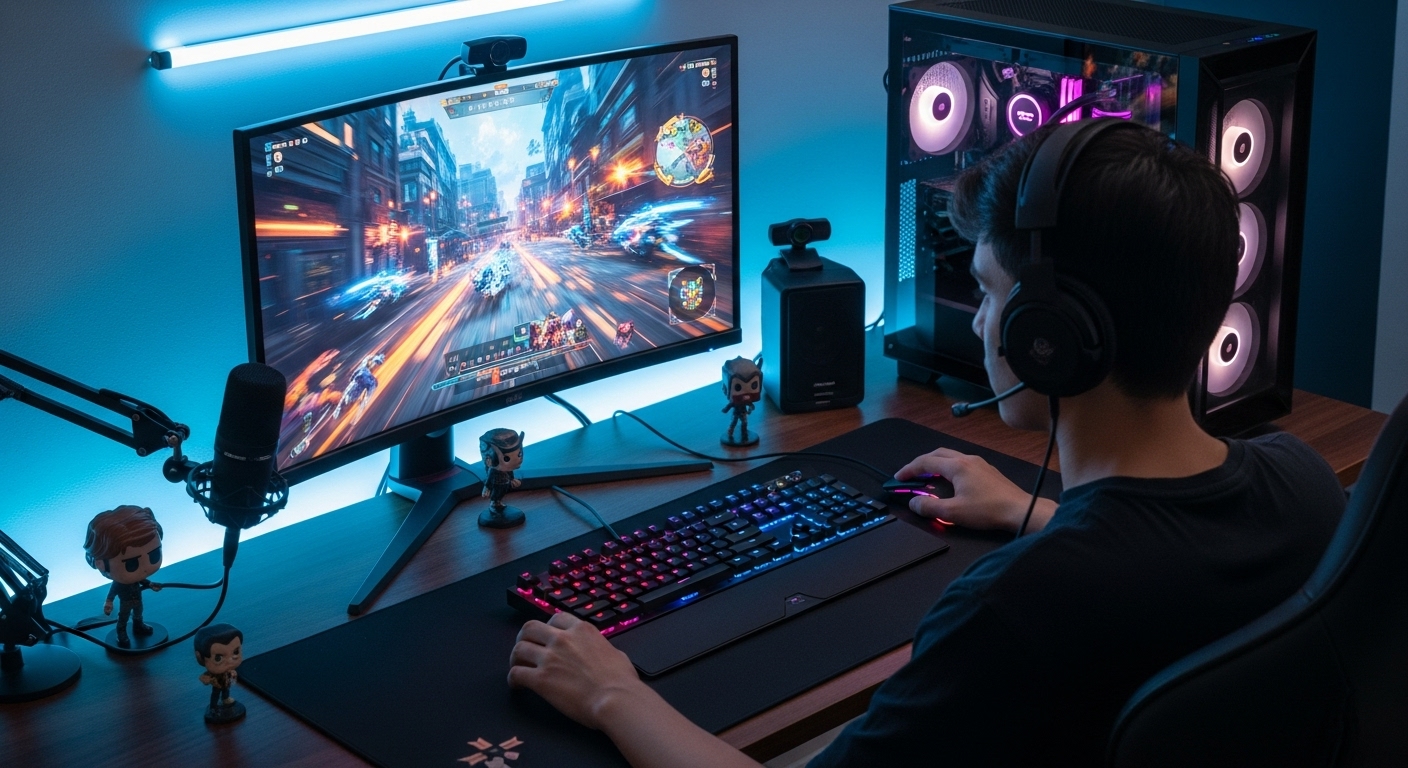
The Evolution of Gaming: From Pixels to Immersive Worlds
Gaming has become one of the most influential and transformative forms of entertainment in the modern world. What began as a simple pastime with pixelated graphics and basic gameplay mechanics has evolved into an industry that rivals film, television, and music combined. The journey of gaming spans decades of technological innovation, creative storytelling, and cultural impact. Today, gaming is not merely about playing for fun; it is a global phenomenon that shapes communities, inspires careers, and pushes the boundaries of art and technology.
This blog explores the evolution of gaming, its technological advancements, the impact on society, and what the future holds for this rapidly expanding world of digital entertainment.
The Origins of Video Gaming
The story of gaming begins in the mid-twentieth century when computer scientists started experimenting with interactive programs. Early prototypes like “Tennis for Two” and “Spacewar!” laid the groundwork for what would become the video game industry. However, it was the 1970s that marked the true beginning of commercial gaming with the introduction of arcade machines.
Games such as “Pong” and “Space Invaders” captured public imagination, turning gaming into a mainstream activity. The simplicity of these games was their strength; they offered quick, accessible fun and appealed to people of all ages. Arcades became social spaces where players competed for high scores and bragging rights. This era established the competitive nature of gaming that still thrives today.
The Home Console Revolution
While arcades dominated public spaces, the emergence of home consoles in the late 1970s and early 1980s brought gaming into living rooms. Systems like the Atari 2600, the Nintendo Entertainment System, and the Sega Genesis allowed players to enjoy their favorite games without leaving home. This shift fundamentally changed how people experienced entertainment.
Iconic franchises such as “Super Mario Bros.,” “The Legend of Zelda,” and “Sonic the Hedgehog” defined this generation. These games introduced narrative depth, character development, and diverse gameplay mechanics. The console wars between companies like Nintendo and Sega fueled innovation, pushing developers to create better graphics, richer stories, and more complex worlds. Gaming was no longer just an activity—it became an adventure.
The Rise of Personal Computer Gaming
While consoles flourished, personal computers opened new possibilities for gaming. PC gaming allowed for greater flexibility, better graphics, and innovative gameplay experiences. Developers experimented with genres that would become industry staples, such as real-time strategy, first-person shooters, and role-playing games.
Games like “Doom,” “Warcraft,” and “Diablo” not only showcased technical capabilities but also emphasized creativity and user engagement. The modding community—players who created custom content for games—began to thrive, giving rise to an entire culture of player-driven innovation. The PC also became the platform of choice for simulation and strategy games, offering depth and complexity unmatched by consoles.
The 3D Revolution and Modern Consoles
The mid-1990s brought a technological revolution with the shift from 2D to 3D graphics. This transition fundamentally changed the gaming experience. Developers could now create fully realized worlds with dynamic environments and lifelike characters. The Sony PlayStation and Nintendo 64 were pioneers of this era, introducing gamers to immersive experiences that set new standards.
Titles such as “Final Fantasy VII,” “Metal Gear Solid,” and “The Legend of Zelda: Ocarina of Time” redefined storytelling in gaming. These games demonstrated that gaming could evoke emotion, tell complex stories, and rival films in cinematic presentation. Developers began to treat games as art, focusing on atmosphere, music, and character development.
This era also introduced new input devices, such as analog sticks and vibration feedback, enhancing immersion and control. The foundation of modern gaming was laid, and the industry was poised for exponential growth.
Online Gaming and Global Connectivity
The late 1990s and early 2000s marked the rise of online gaming, transforming how players interacted. The internet enabled multiplayer experiences that connected gamers worldwide. Titles like “Counter-Strike,” “World of Warcraft,” and “Halo” created massive communities and introduced the concept of online competition and cooperation.
Online gaming changed social dynamics. Players formed teams, guilds, and friendships that transcended borders. The ability to compete against anyone, anywhere, turned gaming into a global phenomenon. The rise of broadband internet accelerated this trend, allowing smoother gameplay and real-time communication.
Massively Multiplayer Online Role-Playing Games (MMORPGs) became virtual worlds where players could live alternative lives. Games like “Runescape” and “EverQuest” offered expansive universes with persistent environments, player economies, and complex social structures. Gaming was no longer a solitary activity; it was a shared experience.
The Birth of Esports
As online gaming grew, competitive gaming—or esports—emerged as a global phenomenon. What started as informal tournaments among friends evolved into organized competitions with professional players, sponsors, and million-dollar prizes. Esports transformed gaming from a hobby into a career path.
Games like “League of Legends,” “Dota 2,” and “Counter-Strike: Global Offensive” dominate the esports scene today. These titles require strategy, teamwork, and precision, attracting millions of viewers worldwide. Esports events fill arenas and are broadcast to global audiences, rivaling traditional sports in popularity and production value.
Professional players train rigorously, analyzing gameplay, refining reflexes, and mastering tactics. Teams have coaches, analysts, and nutritionists, similar to professional sports organizations. The rise of esports highlights how gaming has evolved into a legitimate, competitive, and respected form of entertainment.
The Mobile Gaming Revolution
The advent of smartphones ushered in a new era of gaming accessibility. Mobile gaming reached audiences that had never touched a console or PC, democratizing the gaming experience. Games like “Angry Birds,” “Candy Crush,” and “Clash of Clans” introduced casual gaming to the masses, while titles like “PUBG Mobile” and “Call of Duty: Mobile” brought competitive experiences to handheld devices.
Mobile gaming’s convenience and accessibility made it the fastest-growing segment of the industry. Players could game anywhere, anytime, turning idle moments into interactive experiences. The rise of mobile esports and cross-platform play further blurred the lines between mobile and traditional gaming.
Storytelling and Narrative Evolution in Games
One of the most remarkable transformations in gaming has been its ability to tell powerful stories. Early games focused primarily on mechanics and scoring, but modern titles blend narrative and gameplay to create emotional, thought-provoking experiences.
Games like “The Last of Us,” “Red Dead Redemption 2,” and “God of War” demonstrate that gaming can deliver storytelling on par with the best films and literature. Players are not passive spectators; they actively shape the story through choices and actions. This interactivity creates a deeper emotional connection between players and characters.
Narrative-driven games explore complex themes such as morality, loss, love, and identity. Developers use visual storytelling, music, and dialogue to craft experiences that resonate long after the credits roll. The evolution of storytelling in gaming has elevated it from entertainment to art.
The Role of Technology in Modern Gaming
Technology is the backbone of gaming evolution. Advancements in graphics processing, artificial intelligence, and cloud computing have revolutionized game design and player experiences. Photorealistic visuals, dynamic environments, and real-time physics simulations have made modern games more immersive than ever.
Artificial intelligence enhances gameplay by creating adaptive enemies, realistic NPC behavior, and personalized player experiences. Cloud gaming services allow players to stream games without high-end hardware, making gaming more accessible. Virtual and augmented reality push immersion to new heights, letting players step inside game worlds and interact naturally.
Ray tracing technology brings lifelike lighting and reflections, while haptic feedback and adaptive triggers provide tactile sensations that heighten realism. These innovations show how technology continues to push gaming’s boundaries, transforming imagination into reality.
Gaming Communities and Social Impact
Gaming has always been a social activity, but online connectivity has amplified its community aspect. Players gather on forums, streaming platforms, and social media to share experiences, strategies, and creative content. Communities form around specific games, genres, and even individual streamers, fostering a sense of belonging and shared identity.
Streaming platforms allow gamers to become entertainers and influencers. Players can broadcast gameplay, interact with audiences, and build loyal fanbases. This has created new career opportunities and turned gaming into a viable profession for many.
Gaming communities also have positive social impacts. They bring together people from diverse backgrounds, promote teamwork, and encourage problem-solving. Collaborative games teach communication and leadership skills, while online friendships offer emotional support and inclusivity.
The Economics of Gaming
The gaming industry is one of the most profitable in the world, surpassing both film and music combined. It generates revenue through game sales, in-game purchases, subscriptions, and merchandise. The rise of digital distribution platforms has made it easier for developers to reach global audiences, eliminating barriers of geography and physical production.
Indie developers have thrived in this environment, creating innovative and artistic games that challenge mainstream trends. Titles like “Undertale,” “Celeste,” and “Hades” have demonstrated that creativity and passion can rival big-budget productions.
Microtransactions and downloadable content have become significant revenue streams, allowing players to customize experiences and extend gameplay. However, they have also sparked debates about monetization ethics and player fairness. Balancing profitability and player satisfaction remains an ongoing challenge in the industry.
The Future of Gaming
The future of gaming promises even greater innovation and diversity. Emerging technologies such as virtual reality, augmented reality, and artificial intelligence will redefine how players interact with games. The metaverse—a concept where interconnected virtual worlds allow users to socialize, play, and work—represents the next frontier of gaming.
Cloud gaming will make high-end experiences accessible to everyone, regardless of hardware limitations. Cross-platform play will further unify gaming communities, breaking down barriers between devices and ecosystems. Advances in AI will create dynamic, personalized worlds that adapt to each player’s style and decisions.
Sustainability will also become a major focus, as developers and hardware manufacturers strive to reduce energy consumption and electronic waste. Gaming will continue to influence education, therapy, and social development, proving its versatility beyond entertainment.
Conclusion
Gaming has come a long way from its humble beginnings in arcades and living rooms. It has evolved into a global industry that blends technology, art, and human creativity. From the early pixelated screens of the past to the breathtaking realism of today’s virtual worlds, gaming continues to inspire, challenge, and connect people across the globe.
It is more than just a pastime—it is a medium of expression, competition, and storytelling. Gaming unites players from different cultures, transcending language and geography. As technology advances and creative boundaries expand, the possibilities for gaming are limitless.
The evolution of gaming reflects humanity’s enduring desire to explore, create, and connect. Each generation of players builds upon the last, shaping an ever-evolving landscape of imagination and innovation. The future of gaming is not only about better graphics or faster hardware—it is about deeper experiences, stronger communities, and the endless potential of interactive storytelling.
Gaming has become a defining element of modern culture, and as it continues to grow, it will remain at the forefront of technological and creative evolution for generations to come.